

Acquisition & funding
Understand the planning position and development assumptions behind the asset before progressing a transaction or funding proposition.
- What is the existing consent position?
- Which dependencies require further evidence?
Planning intelligenceAsset perspective
Planning can materially change the risk, value and future of an asset.
One asset / A connected planning picture
For the people behind the asset
The planning perspective
A valuable asset can carry a complicated planning position. Its history, permissions, conditions, policy context and constraints all influence the options available and the work required to progress them.
STAGE brings those questions into a coherent planning review. We establish the position, test the development opportunity and identify the dependencies that matter to an acquisition, funding decision, disposal or long-term asset strategy.
Site / Evidence / Opportunity
Bring site context, planning records, constraints and development options into one connected picture before committing capital or deciding the next stage.
Planning analysis / Constraints / Strategy

Shoreditch, London / Urban asset photography.
Connect site appraisal, planning policy, access and environmental questions with the wider asset strategy. STAGE coordinates the professional team and identifies the evidence needed to assess the opportunity, reduce uncertainty and structure a clear route forward.
STAGE / Evidence / Asset strategy

AI-generated editorial illustration / Concept plans and materials.
Connect site context, planning records, drawings and specialist advice before committing capital or fixing the strategy. One accountable point of contact keeps the planning questions and the next stage connected.
STAGE / Drone capture / Mapping / Asset context
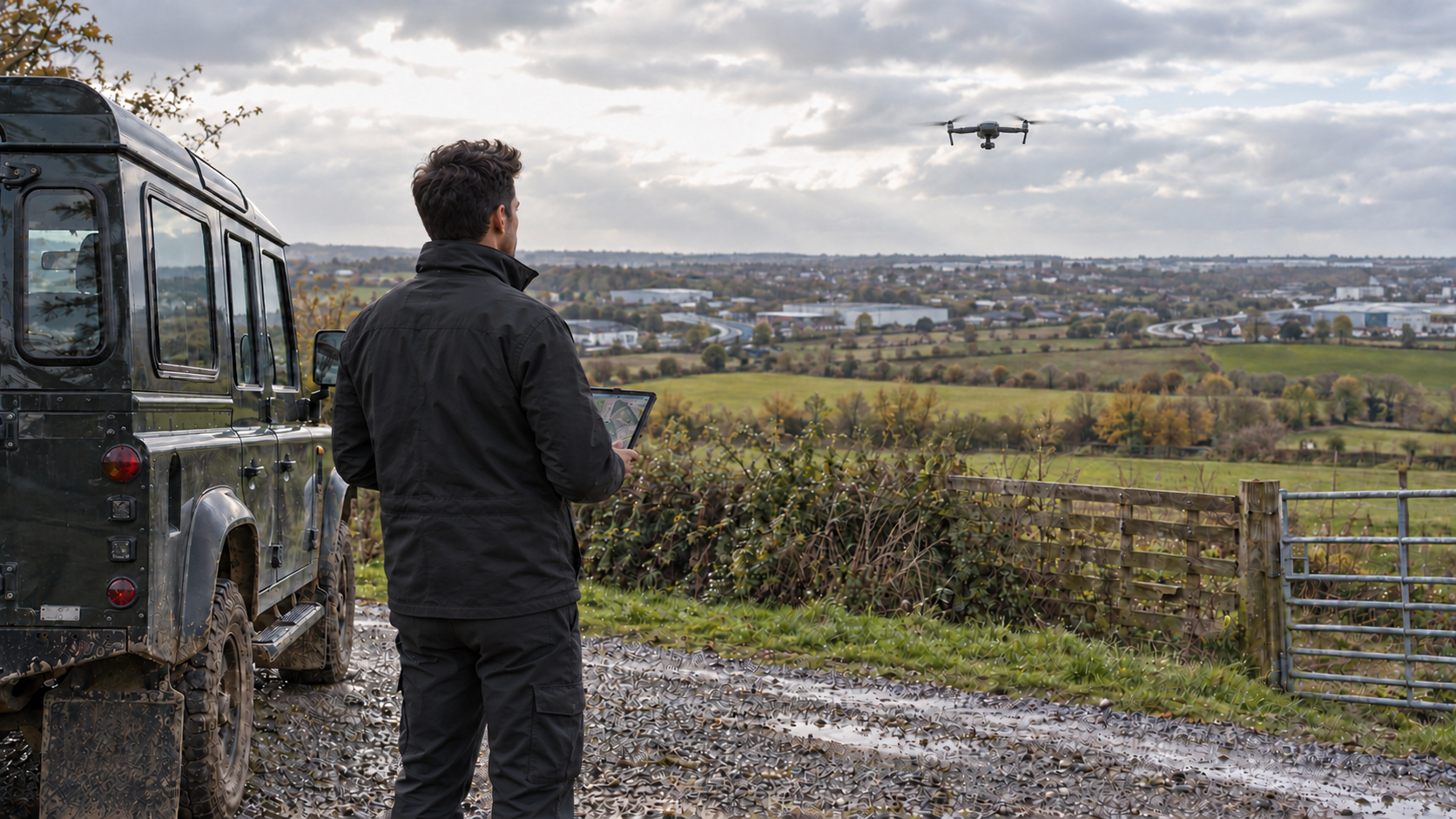
STAGE / AI-generated field illustration with conceptual aerial mapping.
Bring aerial context and mapping together with planning records and specialist advice. Establish the questions that could change an acquisition, funding decision or development strategy before the route becomes fixed.
Existing asset / Development options / Informed decisions
See how an underused asset could change before deciding whether to acquire, retain, reposition or dispose.
An illustrative waterside commercial asset, tested through adaptive reuse, proportionate infill and a clearer relationship with access and public realm.
BeforeUnderused commercial asset / Illustrative site
AfterReuse & repositioning / Illustrative option
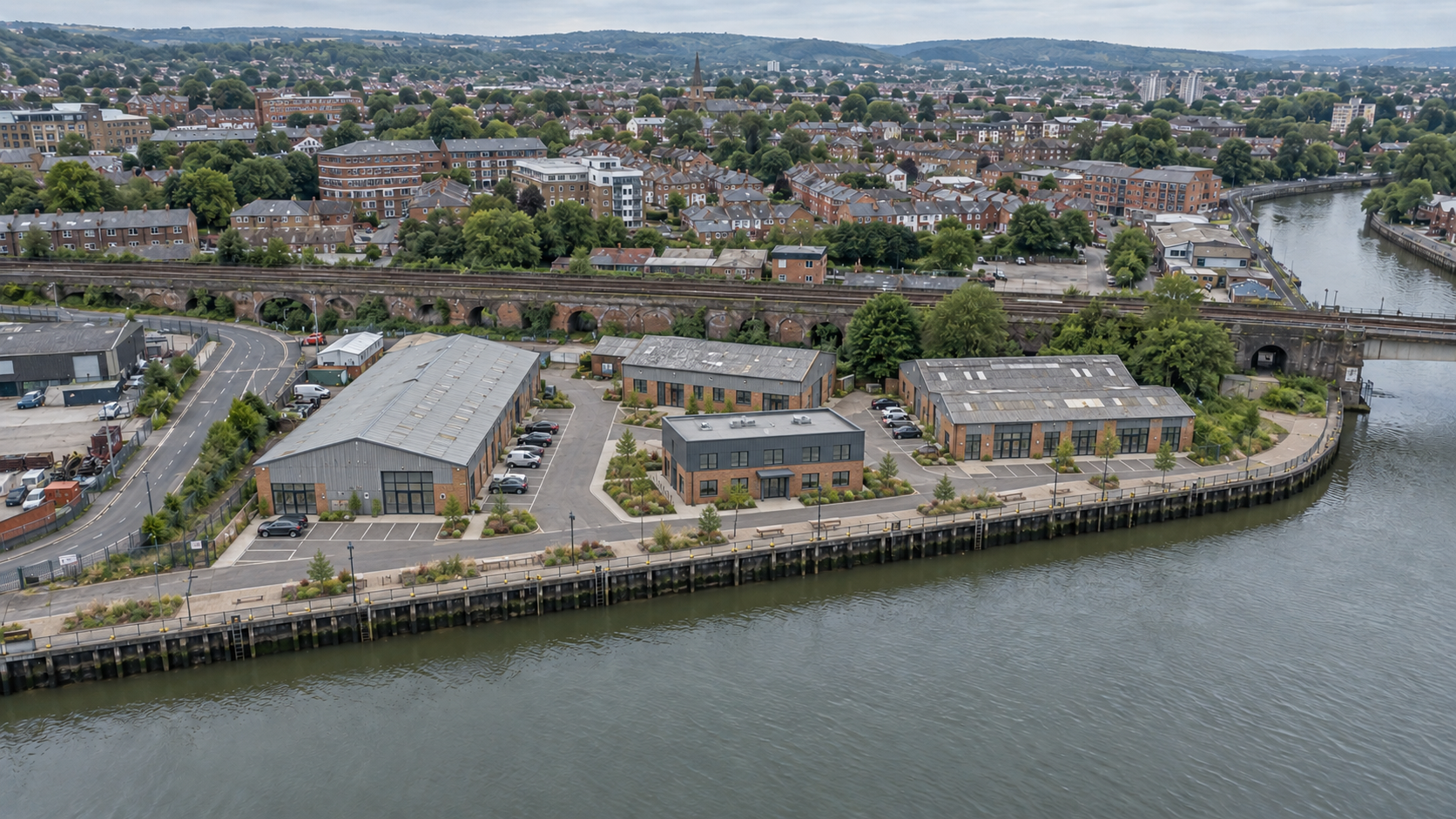
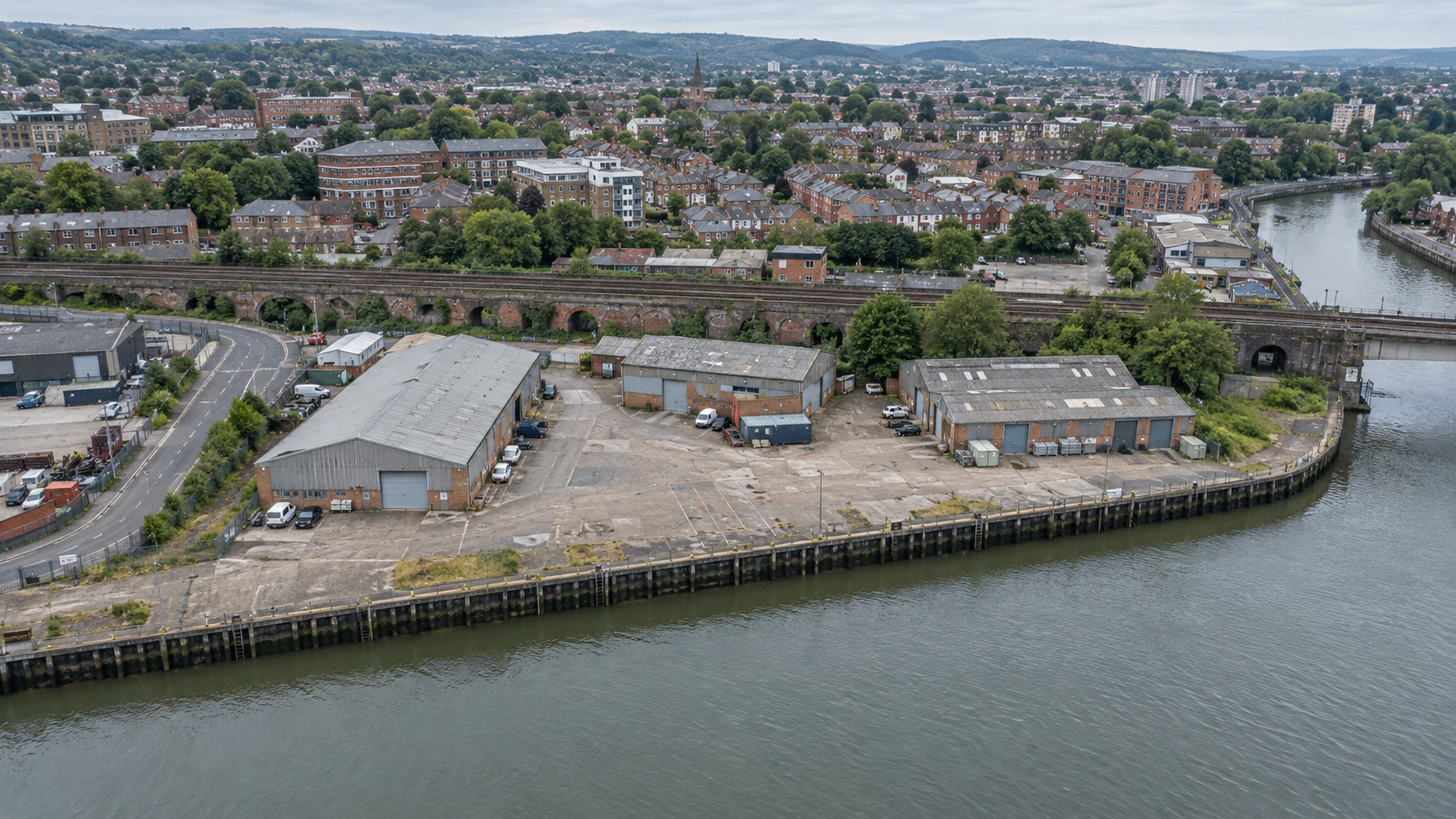
Drag the divider to compare. Use arrow keys when focused.
Concept visualisation / AI-generated matched views of an illustrative development option.
Planning records, consent conditions, constraints and the evidence still needed.
Test development potential alongside the asset and investment objectives.
Clarify dependencies before committing capital or fixing the strategy.

Drone / Mapping / Site intelligence
Aerial capture and mapping put buildings, land, access and neighbouring uses in one view. STAGE connects that context with planning records and coordinates the specialist investigations needed to test the opportunity.
Explore drone & site intelligenceInstitutional capability
Planning intelligence tailored to the asset, the decision and the work required to move forward.
Establish the planning position before a commitment is made.
Review planning history, policy, permissions, existing uses and site constraints in the context of the proposed transaction or asset strategy. Identify the questions that require further investigation and coordinate relevant specialist inputs.
Understand the permission and the work still required.
Examine permissions, approved drawings, conditions, obligations and the available implementation evidence. Establish the planning requirements that need to be addressed, including the specialist or legal inputs needed to clarify the position.
Test the opportunity within the land or asset.
Assess potential development, adaptation, changes of use or repositioning against the planning context and site constraints. Distinguish initial opportunity from the evidence, engagement and further work needed to develop a credible planning proposition.
Client case studies
Higher Brynn recycling facilityMake the planning dependencies visible.
Consider how the existing planning position, proposed use, conditions and environmental or technical interfaces affect the intended strategy. Set out the planning questions, dependencies and sequencing for consideration alongside the wider professional team’s work.
Structure the planning response when an asset needs a new direction.
Support owners, lenders, restructuring professionals and their advisers in understanding the planning position and available options. Review the existing use, consents and constraints, and identify the planning work needed to assess a future use, disposal or repositioning strategy.
Bring a consistent planning perspective across a portfolio.
Review planning positions across multiple assets using a consistent scope. Identify where further evidence, consent work or development-potential assessment is needed, and structure priorities around the client’s objectives and the particular circumstances of each asset.
Connect the planning work with the transaction strategy.
Identify the planning evidence and work that should inform an acquisition or disposal. Coordinate the planning perspective with legal, environmental, design and commercial advisers, keeping assumptions and unresolved questions visible as the strategy develops.
The asset / The decision
For investors, operators and advisers considering the next stage of a valuable or complex asset.
Understand the planning position and development assumptions behind the asset before progressing a transaction or funding proposition.
Review the scope for adaptation, expansion, change of use or restoration, connecting operational needs with the long-term planning strategy.
Bring a consistent planning perspective to multiple assets, difficult positions and decisions about retention, repositioning or disposal.
A coordinated review
A defined planning brief, clear dependencies and a coordinated next stage.
Agree the decision, review the available information and establish the planning position.
Assess the opportunity, constraints and dependencies. Coordinate the specialist work required.
Connect the findings with the next planning stage and the wider asset strategy.
Complex land. Difficult consent. Major opportunity.
Discuss a project