
Illustrative planning study
Strategic
land.
Establish the opportunity, its dependencies and the strategy before committing to a major scheme.
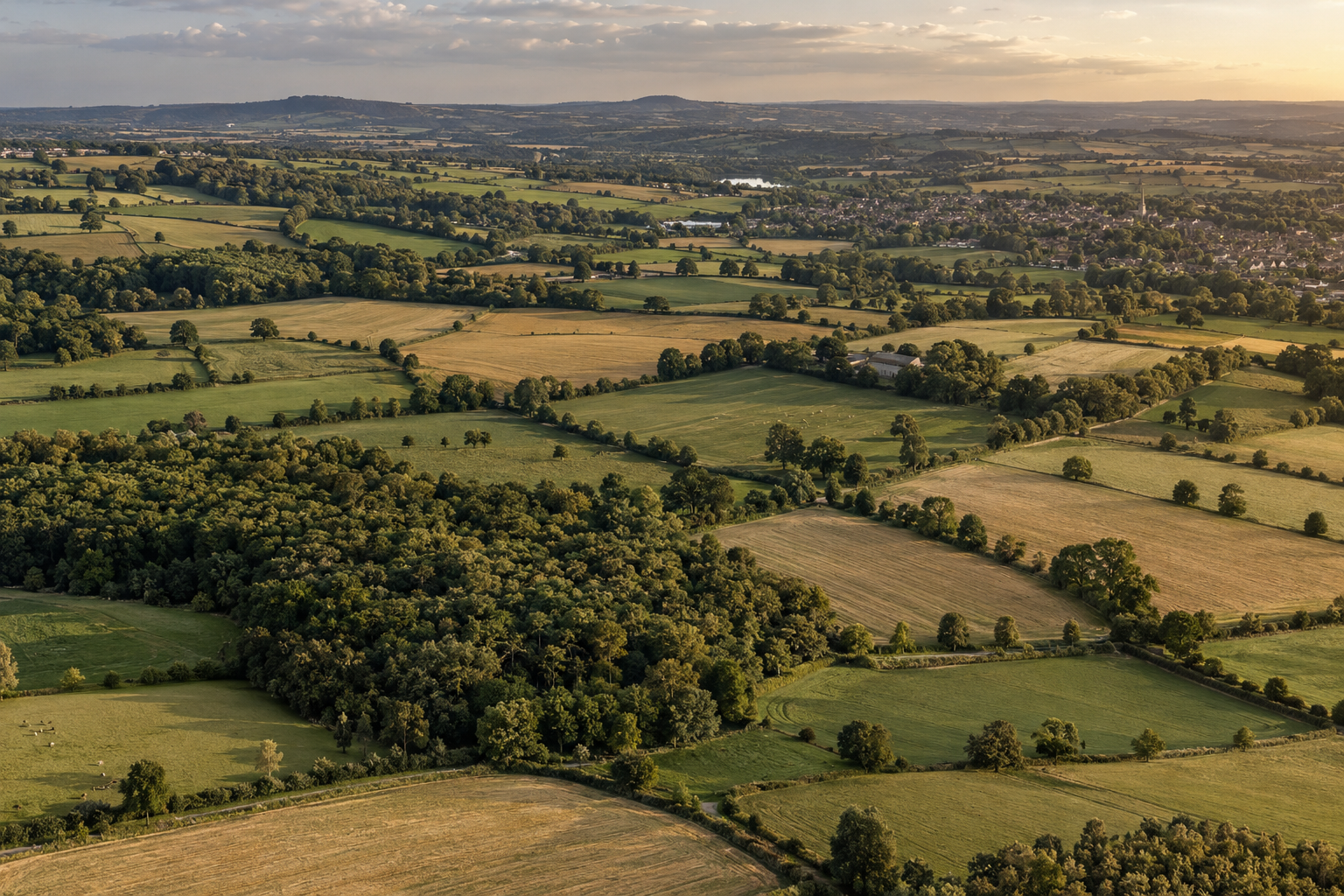
The asset / Opportunity
A landholding in its wider context.
Settlement-edge land may offer residential or mixed-use potential, but its position beside an existing community is only one part of the planning question. Policy, landscape, access and infrastructure need to be understood together.
This study considers how a landowner, developer or investor could assess the opportunity before deciding how to acquire, promote, design or progress the holding.
The client decision
Make the land decision with a clearer planning picture.
The objective may be to establish which parts of a holding merit further assessment, what scale and form of development could be tested, and which dependencies could affect the programme. The strategy should inform the land decision and the design brief together.
STAGE / Strategic briefing
The land opportunity
The next decision.
A site boundary is the starting point. The planning position, settlement context and infrastructure dependencies need to shape the acquisition, promotion and development brief.
Select the client decision
Illustrative briefing. These are decisions to test, not verified project findings or outcomes.
The question that shapes the brief
Does the planning evidence support the acquisition?
What could be at risk
Capital is committed against assumed development capacity, access or planning prospects that have not been tested.
How STAGE would lead
Review policy, planning history and site evidence against the acquisition assumptions. Identify findings that could change the decision.
Test development options through an initial masterplan, coordinating targeted access, infrastructure, landscape and environmental advice.
The brief would establish
A planning due-diligence brief identifying development options, material dependencies and the evidence needed before committing to the land.
The question that shapes the brief
What would make the case for this land credible?
What could be at risk
Promotion advances without a clear planning route or evidence addressing the site’s most significant dependencies.
How STAGE would lead
Establish the policy position, promotion routes and evidence needed to assess the land in its wider settlement context.
Develop the masterplanning proposition and coordinate the specialist team around a defined planning case and work programme.
The brief would establish
A land-promotion strategy defining the proposition, planning route, evidence programme and decisions required to progress it.
The question that shapes the brief
What needs to happen next, and who takes ownership?
What could be at risk
Unresolved access, infrastructure or phasing requirements emerge after important design choices, creating further work and uncertainty.
How STAGE would lead
Bring the planning position, masterplan and technical findings into one project brief. Establish the decisions, responsibilities and dependencies.
Run the coordinated programme through design, applications and any subsequent conditions work, keeping implementation requirements in view.
The brief would establish
A coordinated project programme with defined evidence briefs, decision points and a proposed sequence through planning and implementation.
Acquire briefing selected.
The challenge
Capacity needs evidence.
A concept masterplan can move quickly ahead of the planning evidence. Access, infrastructure, environmental and landscape questions need to influence the scheme while the important choices can still be made.
Multiple consultants can produce individually useful reports without a coherent proposition. The planning and architectural strategy needs to give each commission a purpose and resolve competing inputs into one considered scheme.
What could be at risk
The commercial position behind the planning question.
Acquisition & capital
Land decisions can depend on development assumptions that have not been tested.
Design & programme
Late constraints or infrastructure questions can require avoidable redesign and further work.
Consent & implementation
A scheme needs a route through the planning process and a considered approach to delivery.
The STAGE strategy
Intelligence.
A coordinated route.
Planning leads the strategy. Design, site intelligence and specialist evidence develop together around the asset and the client’s decision.
Read the land
Review the holding, policy context, planning history and available site information. Identify the constraints, opportunity and questions requiring evidence.
Develop one planning brief
Coordinate architecture and masterplanning with access, infrastructure, landscape and environmental inputs. Test the proposal as the evidence develops.
Communicate the scheme
Use coordinated drawings and appropriate CGI, walkthroughs or models to explain the proposal to the client, decision-makers and stakeholders.
Carry the strategy through
Structure the application and technical reporting, then coordinate conditions and implementation requirements around the intended development sequence.
The team
One strategy.
One team.
One point of contact.
STAGE is an integrated planning, architecture and development-intelligence practice. Planning remains the specialist core.
STAGE coordinates the professional team required by the brief, aligning commissions, evidence and decisions around one strategy. External specialist consultants are appointed and managed where needed.
- Planning & masterplanning
- STAGE leads the planning strategy and coordinates architecture and masterplanning around the client’s objectives and site evidence.
- Site intelligence
- Surveys, available site records and proportionate drone inputs support an informed understanding of the land.
- Specialist consultants
- Access, infrastructure, landscape and environmental commissions are scoped and coordinated to address the scheme’s dependencies.
- Scheme communication
- CGI, virtual walkthroughs and physical scale models can be coordinated where useful to explain the proposed development.
The next stage
From land potential to an accountable programme.
The next stage would define the evidence, design and planning work needed to support the client’s decision. A clear brief, coordinated team and identified dependencies give the land strategy a practical route forward.
Discuss your land or asset